

Dashavatar: Classic Indian Stories – When Lord Vishnu’s Ten Avatars Come Alive in a Graphic Novel

Before the world discovered superheroes, Indian history had already given us ten extraordinary avatars of the ultimate protector.
What if we told you that some of the most extraordinary superhero stories were being told in India long before the world became obsessed with capes, masks and cinematic universes?
Think about it. A cosmic protector who could manifest in different forms, appear whenever evil threatened the balance of the universe, and take on seemingly impossible challenges. Sounds like a superhero, doesn’t it?
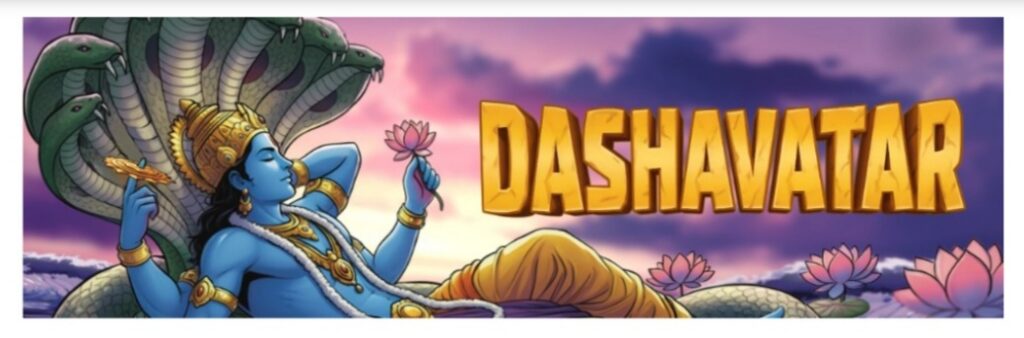
Well, meet Lord Vishnu!
The Dashavatara, the ten celebrated avatars of Lord Vishnu, is one of the most fascinating narratives in Indian mythology & history. These stories have travelled through generations, finding a permanent place in our cultural consciousness. Whether it is Matsya saving creation from a devastating deluge, Narasimha emerging to defeat an almost invincible demon king, or Lord Rama and Krishna becoming timeless symbols of righteousness, these stories have never really left us.
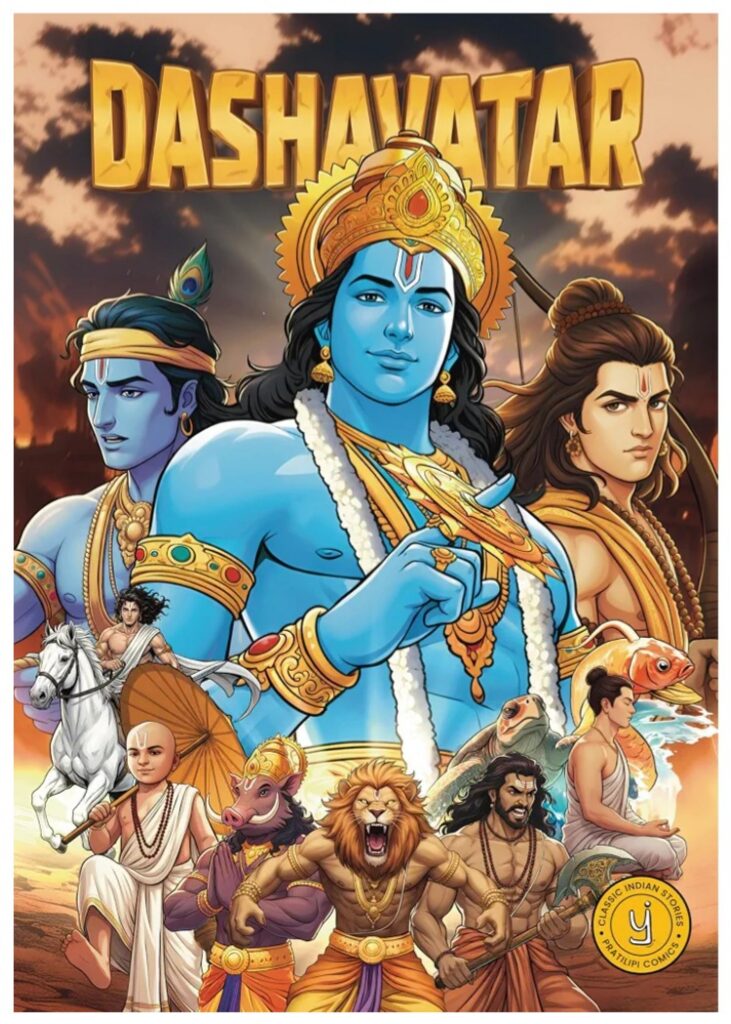
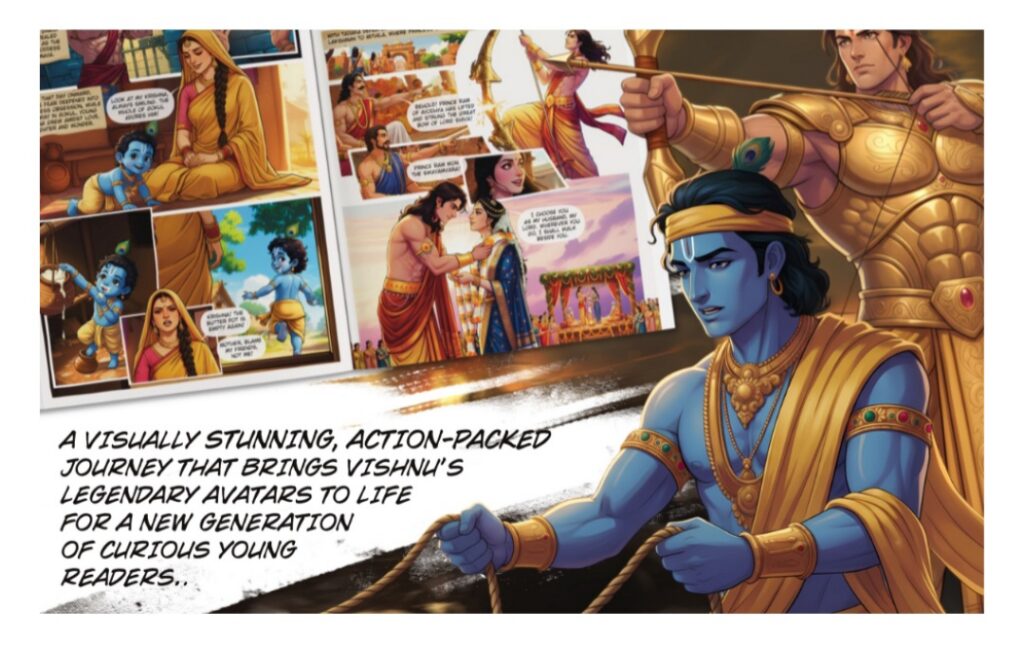
Now, Westland and Pratilipi Comics are bringing this legendary collection of stories to a new generation through Dashavatar: Classic Indian Stories, a colourful graphic retelling designed to make mythology accessible and exciting for young readers.
And honestly, what better way to introduce the next generation to these timeless stories than through comics?
Ten Avatars, One Cosmic Mission
The central idea behind Dashavatara is fascinating. Lord Vishnu, the preserver of the universe, manifests in different forms whenever the balance of creation is threatened. Each avatar arrives with a purpose, confronting a particular challenge and restoring Dharma.
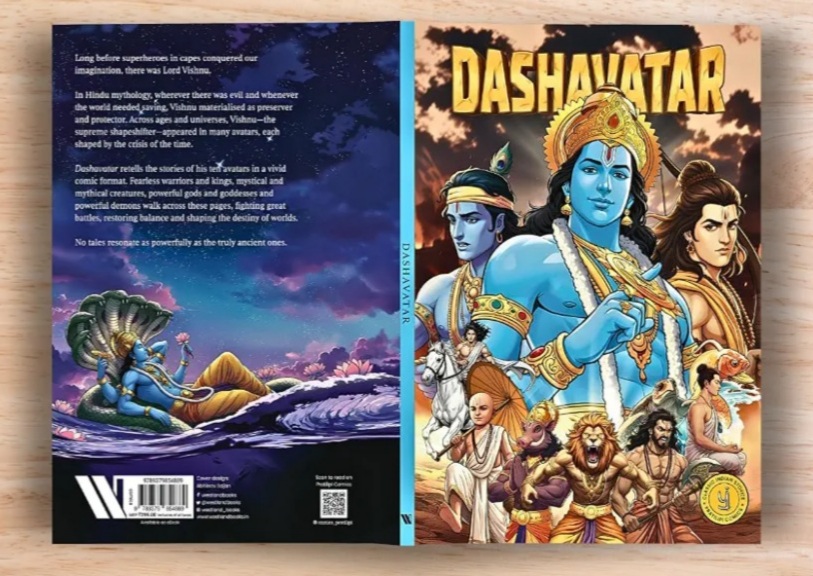
The ten avatars traditionally associated with Dashavatara are:
- Matsya: The fish avatar who saves life and sacred knowledge from a catastrophic deluge.
- Kurma: The tortoise avatar who supports Mount Mandara during the legendary Samudra Manthan.
- Varaha: The mighty boar who rescues Goddess Earth from the depths of the cosmic ocean.
- Narasimha: The half-man, half-lion incarnation who defeats the seemingly invincible Hiranyakashipu.
- Vamana: The dwarf Brahmin who approaches King Mahabali and transforms a seemingly simple request into a cosmic act.
- Parashurama: The warrior sage wielding an axe, associated with restoring balance against oppressive rulers.
- Rama: The prince of Ayodhya whose journey, courage and commitment to Dharma form the heart of the Ramayana.
- Krishna: The divine strategist, philosopher and protector whose teachings in the Bhagavad Gita continue to inspire millions.
- Buddha: Included in several widely recognised Dashavatara traditions as an incarnation of Vishnu.
- Kalki: The prophesied future avatar who is destined to appear at the end of Kali Yuga.
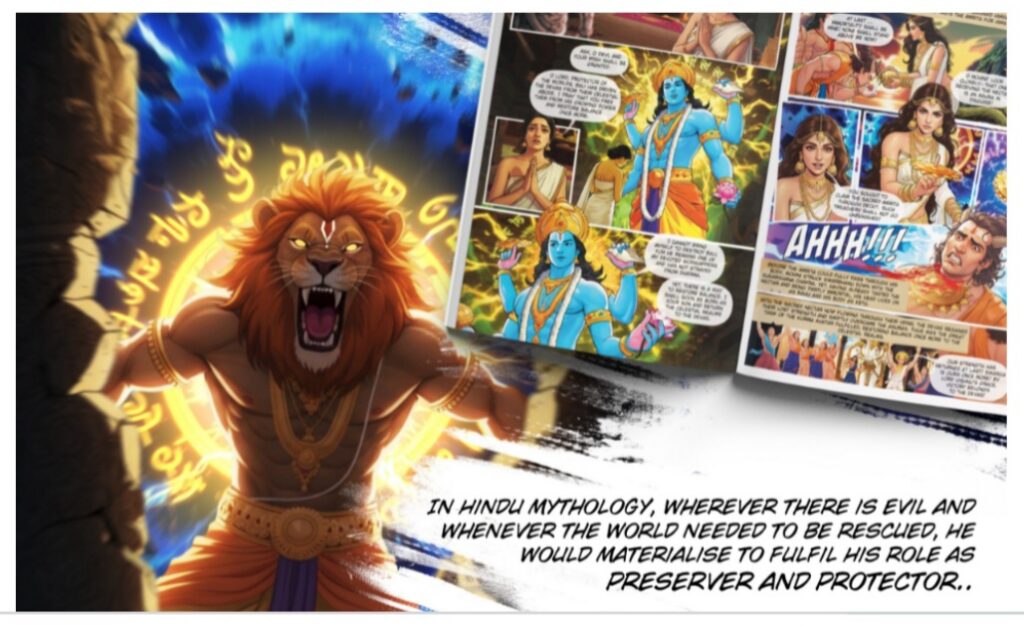
From aquatic beginnings and extraordinary creatures to warriors, kings and divine manifestations, the Dashavatara offers an incredible variety of characters and storytelling possibilities.
Every avatar has a different personality, a different challenge and a different lesson. Yet, they all connect to one enduring idea: “whenever darkness threatens the world, hope finds a way to return.”
Dashavatara and Darwin’s Theory of Evolution: An Interesting Connection
Here is something that makes the Dashavatara even more intriguing.
Have you ever noticed how the first few avatars of Vishnu can be compared symbolically with the progression of life forms discussed in evolutionary theory?
Matsya represents an aquatic form. Kurma brings a tortoise, a creature associated with both land and water. Varaha takes the form of a terrestrial mammal. Narasimha combines human and animal characteristics, followed by Vamana, a recognisably human form.
This sequence has often been interpreted as a symbolic parallel to the journey from aquatic life towards increasingly complex terrestrial and human forms.
It is an interesting lens through which to revisit these ancient stories. However, it is important to distinguish a symbolic comparison from scientific evidence. Darwinian evolution is a scientific theory supported by extensive biological and fossil evidence; the Dashavatara is a religious and mythological tradition, not a scientific account of evolutionary history.
Nevertheless, the resemblance makes for a fascinating conversation about how mythology can inspire people to explore questions about life, nature and existence.
Why Dashavatar Deserves Attention
Mythological or Historical storytelling has always had a special place in Indian comics and illustrated literature. From Amar Chitra Katha to the many regional comic publishers that have explored our epics, generations of readers have discovered Indian mythology and history through illustrated adventures.
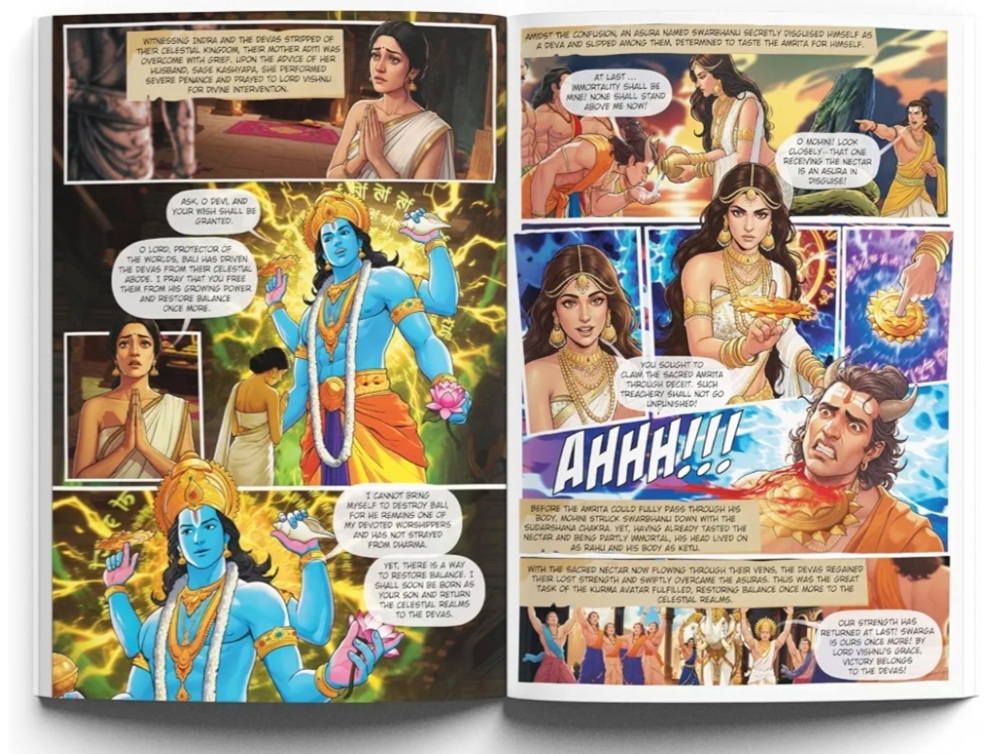
The beauty of the comic book format is its ability to make larger than life stories more approachable. A young reader might find a traditional mythological text intimidating, but a visually engaging graphic narrative can become an invitation to explore the same story in greater depth.
That is where Dashavatar: Classic Indian Stories finds its appeal.
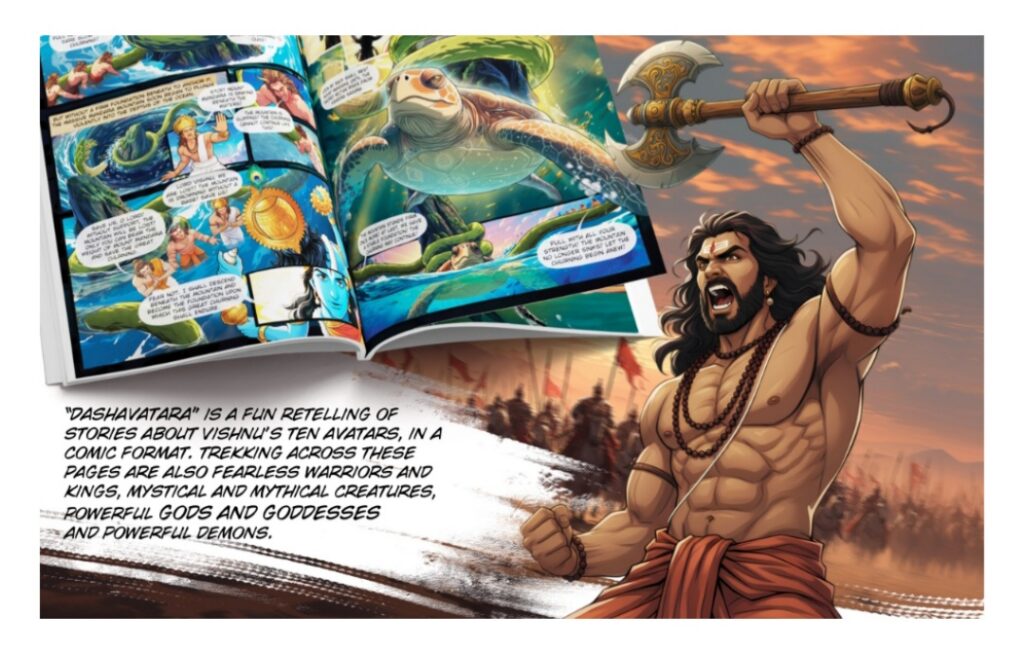
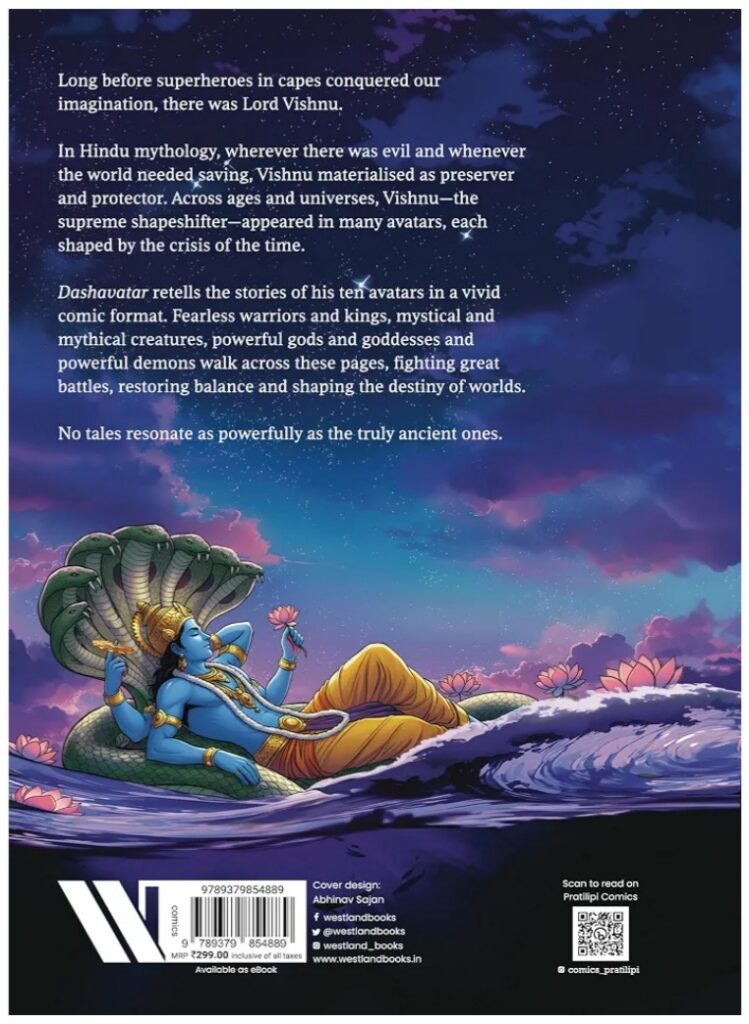
The book promises a visually rich, action-packed retelling featuring not just Vishnu’s ten avatars but also fearless warriors, kings, mystical creatures, gods, goddesses and powerful demons.
It is also part of Westland’s Classic Indian Stories series, which reimagines traditional Indian narratives through contemporary, full colour graphic storytelling.
For younger readers, it could be an engaging introduction to mythology. For parents, it offers an opportunity to revisit stories that have been part of our cultural heritage for generations. And for comic book enthusiasts, it is another reminder that Indian mythology has an extraordinary universe of characters waiting to be explored.
Dashavatar Book Details
- Publisher: Westland
- Series: Classic Indian Stories
- Associated imprint: Pratilipi Comics
- Publication date: 22 June 2026
- Language: English
- Pages: 108
- Format: Paperback
- Price: ₹282
- Purchase: Amazon
Comics Byte Take
There is something special about stories that refuse to grow old.
We may have moved from listening to tales told by our grandparents to watching superheroes battle across enormous cinematic universes, but the fascination with extraordinary heroes and their adventures remains unchanged.
The Dashavatara is not simply a collection of ten divine forms. It is a celebration of imagination, faith, courage and the eternal struggle between good and evil.
And perhaps that is the real beauty of bringing these stories into comic books. The next generation gets to discover them in a format they love, while older readers get another opportunity to revisit a world they have known since childhood.
Because long before the Avengers assembled or the Justice League united, Lord Vishnu had already answered the universe’s call ten different times.
Some legends don’t need a reboot. They simply need to be retold. Cheers – Comics Byte!!

Netra–Avadh Graphic Novel – Pratilipi Comics

